
Calendar of events
Here you will find all of our congregation’s Sunday services, Board and Committee meetings and other events. Use the calendar controls to see events for past or future dates. For a quick look at recent Sunday services, click here!

Join Donnie Jennings and Joy Huebert as they describe their experiences with the spiritual communities of Twelve Step Programs. Formed in 1935 by Bill Wilson as a community based solution to intractable alcoholism, there are now 34 programs addressing dependencies and behaviours such as Alcoholics Anonymous or Narcotics Anonymous, along with family support programs, worldwide with millions of members.
The 12 steps ask individuals to admit they are powerless, turn their lives over to a higher power, make amends and foster a spiritual awakening. What is it like to surrender to a higher power? IHow did this work in two real lives? Note that no graphic or disturbing personal content will be shared.
What will hold us together today? As an antidote to a world built around us/them, we’ll lean into this counter-story: that difference makes strength, and that our distinctive model as UUs – based not on sameness but on cultivating relationship and shared commitments across differences of belief – carries seeds of the transformative solidarity our world needs now. Come meet this moment with us.
Reverend Nicolin Guerrier is the CUC’s Congregational Life Lead for the Central and Eastern Regions. Recently returned to Canada after seven years serving Unitarian Universalism in the US, they persist in finding small glimmers of hope everywhere.
Camellia Janhanshani is the CUC’s Dismantling Barriers Lead, a new position brought in in October 2024 dedicated to uplifting and integrating our 8th principle of accountably dismantling barriers to inclusion in ourselves and our institutions.
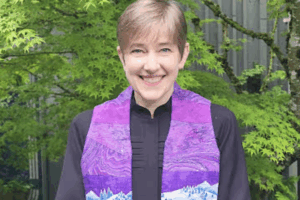
In her book, The Serviceberry, Abundance and Reciprocity in the Natural World, Robin Wall Kimmerer teaches us about the gift economy, which is intrinsic to many Indigenous cultures. What can we learn from this model – how might it help us better care for one another and this earth we share? Is it possible to do in today’s North American capitalist society?
As a mini-exercise, an embodied way of practising the principle, you are invited to bring ONE item you already have to give away in a gift exchange. Please bring ONE thing from your home which you have appreciated and are now happy to pass on to someone else.
- This is not a way to get rid of unwanted stuff; it’s not a garage sale. Look for something you really like, something still in good condition. Something you think someone else might be excited to receive.
- Please bring only ONE thing.
- We will collect your gifts before the service, and you can choose a gift to take home with you after the service.
- Rev. Melora will give anything not chosen by a Capital member to WIN (Women in Need).
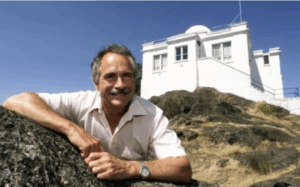
Speaker: Laurie MacDuff
Nobody expects the sudden loss of a loved one. Early during Covid lockdown, Laurie’s husband of 47 years died suddenly. In this inspirational homily, she will share lessons learned.
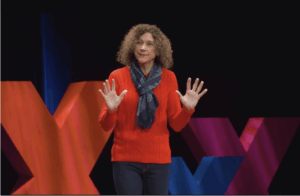
Speaker: Paula Stone Williams, TED Talk
Paula speaks with humor and compassion about the differences in her life from the time she was a man and those when she transitioned to a woman. She worked in religious organizations as a man, and was let go by those organizations once she became a woman. She also relates that, “she thinks a lot about her brown skinned daughter and daughter in law and what do they know that I am clueless about?” Paula says “what do any of us really know about the shoes in which we have never walked”.
Speakers: Joy Huebert and Congregants
Enjoy a quiet service on the presence of darkness and light in our lives. Dale Hitchcox, Jeffery Freed, Lee Tuley and Sarah Weaver will present songs, music, poetry and a reflective homily to welcome the turning season.
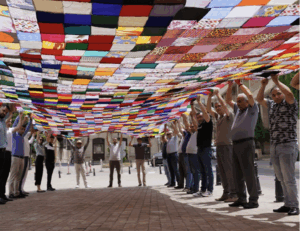
Speakers: Ilara Stefaniuk-Gaudet, Westwood Unitarian Congregation
The practice of community care: how do we ensure that care is integrated into our ways of being together? “It’s through an orientation toward healing and repair for ourselves and others that we recover our capacity for feeling, for relationships, and, with that, the ability to strengthen our bonds and work together.” Prentis Hemphill.
Diana Clift will share some of her experiences as a hypnotherapist which have convinced her that focussed imagination can be life changing.
Forum: There will be a forum after the service and coffee. Di will be in attendance.
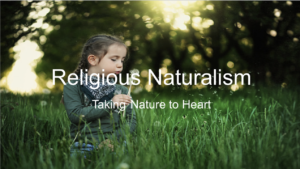
Naturalism is the belief that only natural laws and forces (as opposed to supernatural ones) operate in the Universe. The modern story of our origins – the Big Bang theory – offers ways of understanding ourselves and our worlds.
Bio: Terry Findlay is the webmaster and an officer of the Religious Naturalist Association (RNA), an international group formed about ten years ago. He was born in Victoria, taught Grade 7 for 33 years in Keremeos, and moved back to Victoria in 2014. The RNA likes to say, “We take nature to heart.”
Forum: There will be a forum after the service and coffee. Terry will be in attendance.

During the Humanist Enlightenment of the 1700s, humanistic ideas emphasized reason, science, and individual rights over religious dogma. This era fostered new philosophical, social, and political ideas that shaped modern thought and promoted values such as tolerance and liberalism. In our non-dogmatic, principles-based religion, Unitarian-Universalists continue that enlightenment into 2026. Where do we look for authority?
Bio: Peter Scales is a semi-retired historian who likes to learn and teach about UUism.
Forum: There will be a forum after the service and coffee. Peter will be in attendance.
Unitarian Universalists have never required a single answer to life’s biggest questions. We love mystery. We honor science. We respect doubt. We embrace metaphor. And we leave room for the miraculous—even if we may not all agree on what that word means. Our faith tradition does not have the absolute answers to those big questions. We do offer responses – ideas about the big questions that help us understand life and its meaning.
Bio: Rev. Debra Faulk, Minister Emerita, now lives in an intentional community on Vancouver Island on the traditional land of the lək̓ʷəŋən People, known today as the Esquimalt and Songhees Nations. She is walking distance from two and a ferry ride from the other three grandchildren. She contributes as a volunteer serving on the CUC Board and as a coach for other UU ministers. Debra continues to do consulting work and guest preaching. Other delights include gardening, cooking and wondering.
Forum: There will be a forum but the speaker will not be in attendance.
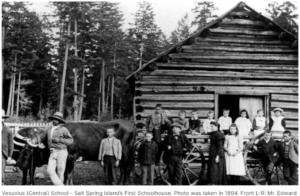
Speaker: The story of John Craven Jones, read by Leigh Waters
In 1859 the Governor of BC invited a group of Black people in San Francisco to come to BC and receive a free grant of land. John Craven Jones took up a parcel of land on Saltspring Island. Having neither school house nor teacher there, John began teaching at two locations on Saltspring. He taught 6 days a week and spent one day working on his wild land to meet the government requirement of improving the property within two years of its acquisition. Indigenous elders of our area tell us, you must know the history of the land you walk on. February is Black History Month, let’s learn about one of BC’s early Black settlers. And think about the effects of isolation from their communities that many settlers and immigrants face.